Personal

Reliving My Childhood

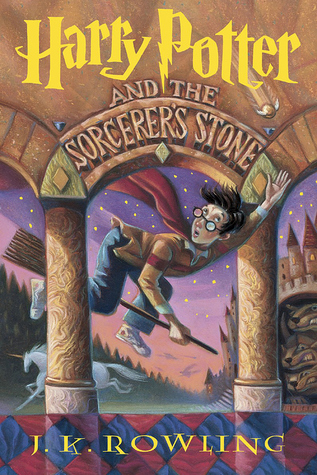
My fiance Josh is only ten months younger than me, but there was a vital difference between our childhoods: he did not grow up in the magical world of Harry Potter! Recently, he asked if we could watch the movies together, and we’ve been marathoning them ever since.
3

I’ve been reading the Harry Potter books since the third grade, and it was really exciting when I read the final book book in the main series since Harry and I were both 17. There was nothing wrong with my childhood, but I was kind of awkward and lonely and occasionally bullied. These books took me away when I read them and gave me a group of fictional friends to care about. I would sit in class and daydream about being at Hogwarts with my real friends.

Even as an adult, I retain a passion for the wizarding world created by the masterful J.K. Rowling. In college at the University of Cincinnati, I even took a literature elective class all about Harry Potter where we were sorted into houses and read all seven books. (If you were wondering, Pottermore ALWAYS sorts me into Slytherin – we’re not all bad, I promise!)

I have read these books and watched the movies countless times. I read the script for Harry Potter and the Cursed Child the day it came out (even though July 31st is also my fiance’s birthday). It’s been a really great experience sharing the movies with Josh, and I hope we read the books together someday. There are a lot of book series that I read as a child that don’t have the same impact in my adulthood, but Harry Potter is not one of them. These are the books that have impacted my life the most, and I love sharing them. I hope that someday I can sit down with my niece or nephew and share this experience with them as well.

Do you have something from childhood that continues to touch your life as an adult? What still excites you and makes you feel like you can always relive the best parts of childhood? Let me know in the comments section!

Book Review

A Picture’s Worth 1000 Words

My day job is in a library, and I do try to keep up with lots of different types of books, including children’s books. I have recently rediscovered the joy of picture books while preparing for one of my outreach programs at a daycare center for developmentally disabled adults. If you have a child or someone in your life who loves picture books, here are five of the best ones I’ve read recently:

1. Otter Goes to School by Sam Garton

27064356

2. Secret Agent Splat! by Rob Scotton

13247075

3. Rainbow Fish Discovers the Deep Sea by Marcus Pfister

6694807

4. Naughty Mabel Sees it All by Nathan Lane

28954216

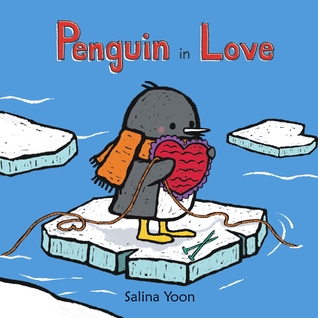
5. Penguin in Love by Salina Yoon

17287023

These books all have amazing, eye-catching illustrations and fun stories. But best of all, they are great books to read aloud. Check them out from your local library!


Industry News

New University of Cincinnati Press

Academic publishing is a really big part of the publishing industry, and I was excited to discover that my alma mater The University of Cincinnati has finally launched their own university press. The University of Cincinnati released an official press release!

Image result for university of cincinnati
Credit: The University of Cincinnati

I’ve always been proud of going to UC and of my hometown of Cincinnati, but I was especially impressed by this new publishing platform’s goal to focus on “social justice and community engagement.” I think that this is an important step towards bridging the gap between academic writing and the rest of the world. I love when lines blur, and that will be exemplified here. Cincinnati has had a lot of social concerns in the past and the present. I think it is amazing that the University of Cincinnati continues to take an active role in creating and maintaining community connections and making a difference in the lives of all the diverse people in the greater Cincinnati area.

We don’t know much yet about the forthcoming publishing products of the University of Cincinnati Press, but I’m very excited to see what comes next. I do know, based on the press release, that they will be publishing in both physical and digital formats, which is wonderful since digital formats can often have a larger reach these days. Hopefully, good things will come of this!

Book Review

Review: The Underground Railroad

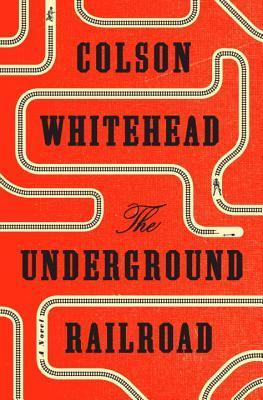
I recently finished reading The Underground Railroad by Colson Whitehead, and it was a really stunning piece of literature. I am so happy that it won this year’s National Book Award!

30555488

This is the third book I have read by Colson Whitehead. The first two were a post-apocalyptic zombie tale called Zone One and a humorous autobiography about his own professional poker playing experiences called The Noble Hustle. Both of these books were vastly different than the historical one I’m reviewing here, but I think that they speak to Whitehead’s genius and the fact that he is fearless and writes whatever he feels like writing instead of staying pigeonholed in one genre. That being said, all of the books and excerpts I’ve read have shared a similar, literary writing style with somewhat flowery prose. I happen to be a fan of somewhat flowery prose, but I could definitely understand if some readers decide they find Whitehead to be a bit too verbose.

The Underground Railroad follows a slave named Cora who escapes from a Georgia plantation and tries to find freedom following the underground railroad. I probably shouldn’t admit this, but I was afraid that I wouldn’t like this because I’ve just read so many slave narratives that I thought it would feel like a repeat of all the others (I feel this way about World War II books as well). However, I was pleasantly surprised! This book was just beautifully written and compelling. I couldn’t put it down, and I felt a close connection to the main character Cora. She was crafted so intricately and perfectly, as were the words used to describe her experiences. Whitehead also ingeniously uses a literal subway system, which felt fresh and interesting.

Whitehead himself is also an interesting guy. I had the pleasure of meeting him a few years ago at an academic event, and he is very charming and down-to-earth. I had frankly been nervous to meet him given his literary standing and MacArthur Fellowship, but he was so funny and intriguing and a bit self-deprecating. I’m sure that these positive memories do play a role in how well I review his books, but I genuinely think this is a great read for anyone who wants something thought-provoking and historical. So often, big awards like the National Book Award give their awards to books that seem so dry and inaccessible, and I’m so pleased that this is neither. I think this one is destined to be considered a classic.

Book Review

Book Review: Guilt by Association

In the interest of full disclosure, this blog post is going to be biased because Marcia Clark is one of my personal heroes. She has gone through so much in her life, and she is just a fascinating person. If I could meet one “celebrity” I would definitely choose Marcia Clark.

Guilt by Association is the first novel (but not the first book) by Marcia Clark. It was followed by three others in the series as well as a few short stories, all of which center around the main character LA Deputy District Attorney Rachel Knight.

10137884

For those who don’t know, Marcia Clark was the lead prosecutor during the O.J. Simpson Trial. If you haven’t heard of that or don’t know all the details, PLEASE go watch American Crime Story: The People v. O.J. Simpson immediately! You may wonder why I think Marcia Clark is so awesome even though she lost the trial. Failure is a part of life. Marcia not only endured a massive disappointment when she lost the trial, but she had to deal with being completely maligned by the press and public. So much of the criticism was about her being a woman in a man’s world. She went through hell publicly , and she came out the other side. She chose to never prosecute another case, and who can blame her after all that she went through? But she didn’t give up on life. She used all of her legal expertise and her eye for detail and became a best-selling author.

Now, back to the actual book I’m reviewing: Guilt by Association. In this first installment of the series, we get to know the character of Rachel Knight really well. She is smart and determined and has an eye for detail – just like Marcia Clark. She even has an eerily similar job to Marcia Clark and often has to deal with high-profile cases. Is Marcia Clark’s character perhaps overly autobiographical? Maybe for some, but I loved that she’s writing what she knows. To me, it really works because she clearly understands the legal system and Rachel Knight, as a character, is well-developed. She’s tough but not invincible. She’s feminine when she feels like it. She endures disappointment and fear. She’s Marcia Clark, and she’s all of us.

In this novel, Rachel finds the dead body of a trusted colleague next to a prostitute. As she investigates, will she uncover her colleagues innocence or guilt or something even more sinister? I thought that the mystery was very engaging, and I enjoyed both the plot and the character development. However, something that might turn off other readers is that there is a lot of description that can, at times, be considered extraneous. I happen to like tiny details like this because I think that they still serve to set the scene and make everything feel real, but I do think it’s a valid criticism from others since the details often aren’t crucial to the story. I think this all boils down to preference. So, if you like a well-detailed legal thriller, give this one a try!

Book Review

Book Review: The Woman in Cabin 10

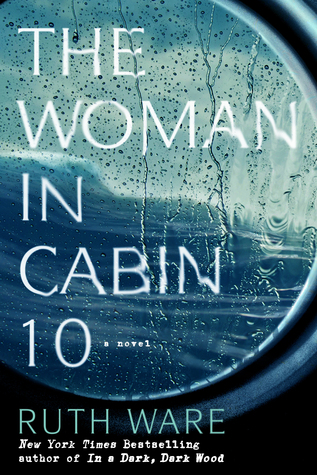
I just finished the book The Woman in Cabin 10, and  I thought it was pretty great! This has been a really hot book at the library where I work. After seeing this book cross my path so many times, I just had to see what the hype was all about.

28187230

This novel is by Ruth Ware, who wrote the much-acclaimed novel In a Dark, Dark Wood. Regrettably, I haven’t yet had a chance to read that one, so I can’t compare the two. Still, after reading The Woman in Cabin 10, I’d definitely be happy to read another mystery by this author.

I don’t want to give too much away about the plot because this is, after all, a mystery and I don’t want to spoil anything. Basically, it’s about travel journalist Lo Blacklock who scores a dream assignment to cover a tiny luxury cruise ship for the magazine she writes for. While there, she sees a woman thrown overboard. However, when she reports the murder, no one believes her and there are no missing passengers. What follows is an exciting, tense mystery.

I’ve read a lot of reviews that compare this book to The Girl on the Train. I don’t think this is really a fair comparison. First off, the main character in this novel was way more likable than any of the characters in The Girl on the Train. The tone of the book also felt way different to me. The Woman in Cabin 10 seemed much more fast-paced to me, and I will say that it kept me far more engaged. I found The Girl on the Train to be a more convoluted version of Gone Girl (which I loved) but I think that this book really stands on its own. The structure is way different, the main character is more likable, and it was much easier to follow.

One thing that I really liked about the book was how it used email and news articles and blog posts and other social media to show how information and misinformation travel in this day and age. It also added to the mystery because it revealed information that I wasn’t always sure I could trust. Again, I don’t want to say any more lest I spoil something.

Overall, I definitely think this is worth a read if you want a thriller or non-cozy mystery. I would avoid it, however, if you are about to embark on a cruise. In that case, wait until you return home safely before giving it a try.

Book Review

Book Review: The Nest

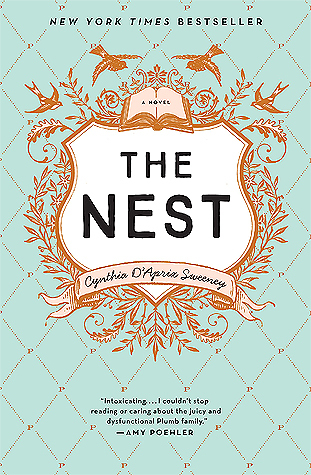
I am very excited to be able to share my thoughts about Cynthia D’Aprix Sweeney’s debut novel The Nest. I have not been this excited about a novel since I read Liane Moriarty’s book Big Little Lies.

25781157

The Nest centers around the Plumb family – four siblings who have been living their lives and making (mostly poor) decisions with the expectation that when the youngest sibling turns 40, they’ll all receive huge sums of money from a nest egg that their father invested before his death. However, something happens that threatens the nest egg and causes each sibling to examine his or her life and choices.

This was an absolutely brilliant novel. The most frequent criticism of the book is that the characters are unlikable. I think this is valid to an extent. Most of the characters are very self-centered, but aren’t we all at some point in our lives, especially when our expectations of how our lives are going to go are challenged? I thought that each and every character, even the numerous minor characters, were so realistically crafted. I will admit that the volume of characters in this book (four siblings + some significant others + some children + coworkers + ex-significant others + a grumpy mother + additional tertiary characters) was a bit intimidating at first, but because even the most minor of characters was given character-development moments, I was able to easily keep everyone straight. Everyone had a distinct personality and remained consistent throughout the novel. Even the character growth was all very plausible and kept in mind how each character had already been established. No one had a seemingly miraculous transformation. They all acted and reacted and responded in ways that made sense for their characters.

The closer I got to the ending, the more I began to fear what was going to happen with the narrative. Would the author choose a cheesy happily-ever-after that negated all of the realism of the previous pages? Would she go for an ending filled with tragedy or would it feel entirely unresolved? I obviously will not be giving away the ending, and I don’t even really want to hint at it, but I will say that it was perfectly crafted. It ended on a note of believable hope and optimism. Things were as resolved as they could be for a dysfunctional family, which is to say that there was still room for anything to happen after “The End” but the immediate core conflicts faced by the characters in the book were resolved beautifully and realistically.

I would absolutely recommend this book to anyone looking for character-driven contemporary fiction, especially if you’re looking for something that deals with domestic issues. Any type of relationship you can imagine (parenthood, romantic entanglements, sibling rivalry, friendship, etc.) is addressed at some point. For writers, I would definitely recommend this book as an example of where an author successfully broke a rule of writing fiction: she does not keep a consistent point-of-view. In this novel, the POV changes almost constantly with each scene, but it absolutely worked. This novel would have been a totally different creature if we were getting information about all of the characters filtered through the eyes of only one character, who will naturally be biased. The way that this is written, we get a true “big picture” view of each character and how they seem themselves and others. It is amazing in terms of character development. Similarly, the way the dialogue is written seems so organic. It never feels stilted or forced. Anyone struggling with writing dialogue should read this dialogue as an example of how to write believable conversations.

I can’t wait to see what Cynthia D’Aprix Sweeney writes next. I’ll have to look through my Goodreads page to confirm, but I’m fairly certain that this was the best book I read during 2016.

Update

Benefits of the MFA

Well, I’m back. I’ve been silent online for quite a while for a variety of reasons. First, until recently, I haven’t felt like myself. I’ve been a bit too sad to want to share much of myself with the rest of the world. But I feel like I’ve grown a lot during my online absence – I’ve learned I’m a lot more resilient than I thought, and that bodes well for me since the writing life is one filled with roadblocks and rejection.

Another reason for my lack of blogging is a happier one – I’ve been working on a Master’s of Fine Arts in writing from Lindenwood University. Whether or not MFA programs are beneficial to writers is a contentiously debated topic in the publishing world. For a long time, I didn’t know if it was the right path for me, but I definitely don’t regret it now that I’m involved.

One of the best aspects of the MFA program, in my experience, is the rigorous amount of writing that is expected. I literally HAVE to write even when I don’t feel like writing. And since my motivation was really low until recently, this has been a great thing for me. It’s teaching me discipline and reminding me that I don’t have to wait for inspiration in order to be creative.

Another beneficial aspect of the program is the fact that I’m getting constant feedback on my writing. My professors and peers have pointed out flaws in my writing that I couldn’t see when self-editing. It’s impossible to be objective when looking at your own writing, so it is invaluable to have an impartial set of eyes give you feedback. Sure, I haven’t agreed with all of the feedback because fiction is so subjective, but so much of it has been amazingly helpful. In the six months I’ve been in the program, I feel  like I’ve grown so much as a writer, and I hope to continue growing.

A lot of people criticize MFA programs because they believe it encourages formulaic writing. I can’t speak about other programs, but that absolutely hasn’t been the case during my program experience at Lindenwood. I’ve been encouraged to write whatever I want – in whatever genre I want. I’ve read very literary stories and stories from every genre from romance to YA to horror to absurdist science fiction to epic fantasy to mysteries. My classmates have strong, distinct voices and styles and this has been encouraged.

Other people criticize MFA programs because they are expensive ways to get feedback. This is true to an extent, but an MFA is also a terminal degree that enables one to  teach writing on a college level. So, the degree is not without its practical value for some. Still, for those who don’t desire to teach, an MFA program can still provide quality feedback. Sure, there are lots of free groups filled with amateurs and hobbyists that may even feature one or two professionals who may be willing to meet with you and give you feedback. I’ve been to some of these groups, and they are great for networking and moral support, but I didn’t find the feedback to be as intense or as insightful as I needed. With the MFA program, I’m growing exponentially faster than I think I would be in a casual writing group. So, I think the expense is worth it. This is an investment in myself, and I think it’s a risk that will pay off in the end.

Anyway, enough of my soapbox. There are lots of good arguments for and against MFA programs. I feel like this was the right decision for myself and I’m excited to share my experiences, but I’m sure there are lots of great writers who don’t need or want an MFA. Every writer’s journey is different, but I’m glad that this program is helping my goals feel a little bit closer.

Book Review

Book Review: Shakespeare No More

Shakespeare No More is  great historical murder mystery by Tony Hays. In this novel, Simon Saddler, visits his estranged friend William Shakespeare only to be told that he believes he is dying from being poisoned. After Shakespeare dies, Saddler embarks on a quest through England to solve his murder.

26590098

In this novel, Hayes references the not-so-popular conspiracy theory that William Shakespeare was murdered. Though the historical accuracy of this is very suspect, this particular novel was a delightful read. Shakespeare is depicted in a believable (probably accurate) way of being smug and philandering. His friend Saddler begrudgingly visits him and later tries to solve his murder. There are many imagined and historical figures in this novel, but everything seems very real. While I can’t say that I felt transported to 1600s England, I enjoyed this book nonetheless. I do prefer a bit more history in my historical mysteries, but this was a fun read with colorful, interesting characters.

This would likely appeal to Shakespeare-lovers and historical mystery lovers who are okay with glossing over historical inaccuracies for the sake of enjoying the narrative. The characters really were great and the pacing was fast, so this might even appeal more to those who have more of an interest in historical settings than in history itself.

Book Review

Book Review: The Tail of Emily Windsnap

The Tail of Emily Windsnap by Liz Kessler is a great start to a fantastical series of juvenile fiction books. They follow 12-year-old Emily Windsnap as she discovers that she is half-mermaid and she embarks on a journey to put her broken family back together again.

161656

This is a delightful book aimed at the middle grade age group. I work in a library, and each year, it seems that our school groups latch on to a particular series. This past school year, all of the girls wanted books in this series, so I decided to read one to see what all the hype was about.

I was so pleasantly surprised by how interesting this book was, and I think it is a great recommendation for young girls. In this book, Emily discovers things about herself and her parents and she struggles to find peace with her mermaid aspects. This could easily be a metaphor for many other things that make some girls feel different from others. In this book, we get to see Emily’s relationship with herself, her mom, her dad, and her friends. For a fantasy genre juvenile fiction book, there was  a remarkable amount of character development. Emily faces real hardships and she struggles to overcome a lot of things. This was  great book, and I’m actually really interested to see what happens next. If you have a daughter, niece, etc. who needs a summer reading recommendation, I think this is a great one!